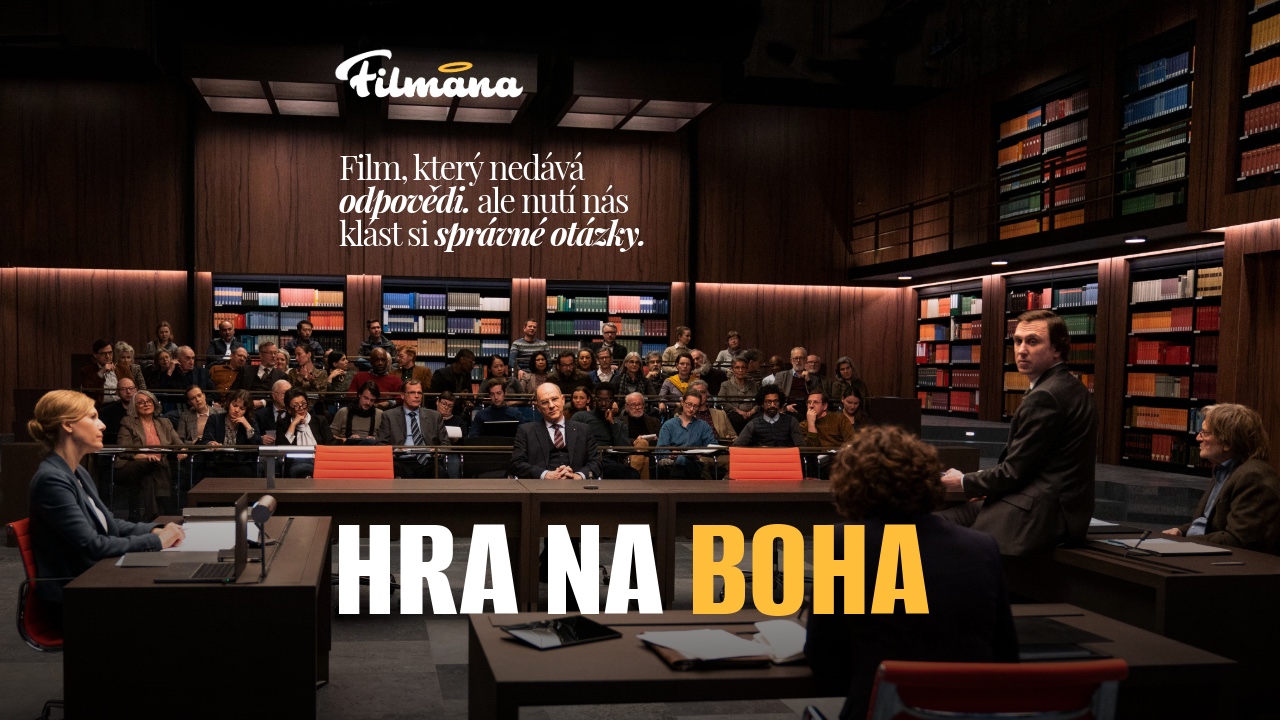
This film by director Lars Kraume, based on a play by Ferdinand von Schirach, may be controversial for many, as it opens the topic of assisted suicide and euthanasia. However, it does not do so in a one-sided way, so it doesn't present the entire story biased from only one side. Instead, it invites viewers to an open discussion about issues that are being addressed not only in Germany but also gradually throughout Europe.
The story is based on a simple, yet incredibly powerful situation. Eighty-eight-year-old Richard Gärtner requests the federal drug agency to issue a lethal dose of sodium pentobarbital, a substance used in euthanasia procedures. At first glance, it might seem that he is suffering from an incurable disease or unbearable pain. However, this is where the crucial turning point occurs. Mr. Gärtner is physically healthy. His decision stems from the death of his beloved wife and the belief that his life has lost its meaning. And it is precisely this fact that shifts the entire film from the realm of medicine to the areas of ethics, law, philosophy, and deeply human emotions.
The entire plot is structured as a meeting of an ethics committee. The audience is gradually presented with experts holding different views – a professor of constitutional law, a representative of the German Medical Association, a Catholic bishop, and Richard Gärtner's family doctor. Each of them presents their arguments, which are not black and white or simple. The film gives equal space to legal, constitutional, moral, ethical, and religious perspectives, as well as the views of doctors, patients, or family members. It does not shy away from questions about palliative care, its availability, and the possibilities it can offer to people at the end of their lives.
The greatest strength of the film is that it does not try to convince the viewer of a single correct answer. The arguments on both sides are presented with respect and intellectual honesty. Each new contribution to the debate can change the viewer's opinion or at least prompt them to question their previous stance. In this way, one finds oneself agreeing with one character and then disagreeing with another while watching. Few films manage to involve the audience in a discussion so intensely.
The ending is quite exceptional. The moderator addresses the viewers directly and asks the same question that the entire ethics committee was addressing: Does a person like Richard Gärtner have the right to medical assistance in ending his life? At that moment, it is no longer about film characters. Each individual must seek the answer within themselves. And that is what makes this film so valuable. It doesn't offer a simple verdict but leaves the conclusion to the conscience, experience, and values of each individual.
The Game of God raises questions that are more relevant than ever. Whose life actually belongs to? Does a person have the right to decide about its end, or do we also bear responsibility towards our loved ones, family, or society? Is it ethical for a doctor to only help save lives, or can they assist someone in dying under certain circumstances? Where does an individual's autonomy end and responsibility towards others begin? The film doesn't force viewers to adopt a particular ideology but invites them to reflect on issues of human dignity, freedom, justice, medical ethics, faith, law, and the meaning of life.
That is why I would recommend this film not only to general audiences but also as an extremely valuable resource for schools, summer camps, educational seminars, or family screenings. The film itself is not the goal – the real beginning is the discussion that follows it. With sensitive moderation, it can open conversations that we might otherwise never have dared to have. It teaches us to listen to the arguments of others, respect different opinions, and reflect on questions that do not have simple answers.
Even for a person who is religious and has seemingly clear answers to similar questions, this film may not be unnecessary. On the contrary. It can be an opportunity to verify whether we can defend our positions not only by repeating them but also by arguing them clearly, sensitively, and objectively. The film helps refine arguments, teaches us to listen to different perspectives, and perhaps shows us a mirror – that in such a discussion, we would struggle to defend our positions without deeper reflection.
The Game of God is not a film that tells viewers what to think. It is a film that leads to discussion. And that is why it is worth watching.
Where can you watch the film?
The film The Game of God can be viewed on the Christian streaming platform Filmana: https://filmana.cz/cs/film/535-hra-na-boha and in the iOS and Android apps.
Bc. Marek Poštulka, Filmana